We Asked AI About Rosacea and Teen Acne -- An Esthetician Grades the Answers
AI vs Beauty Pros: We Put Gemini to the Test on Hair Color, Rosacea, and Teen Acne
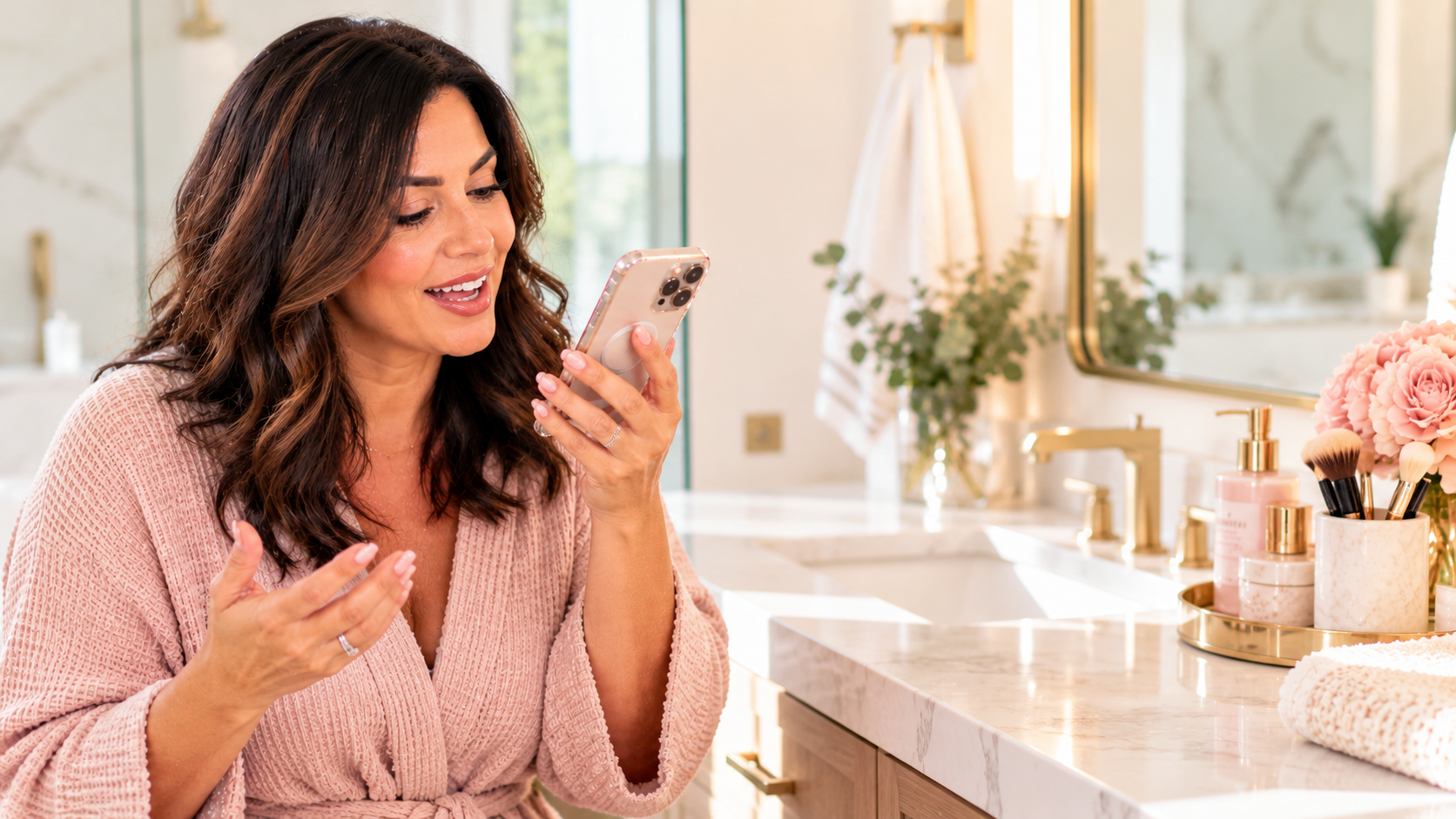
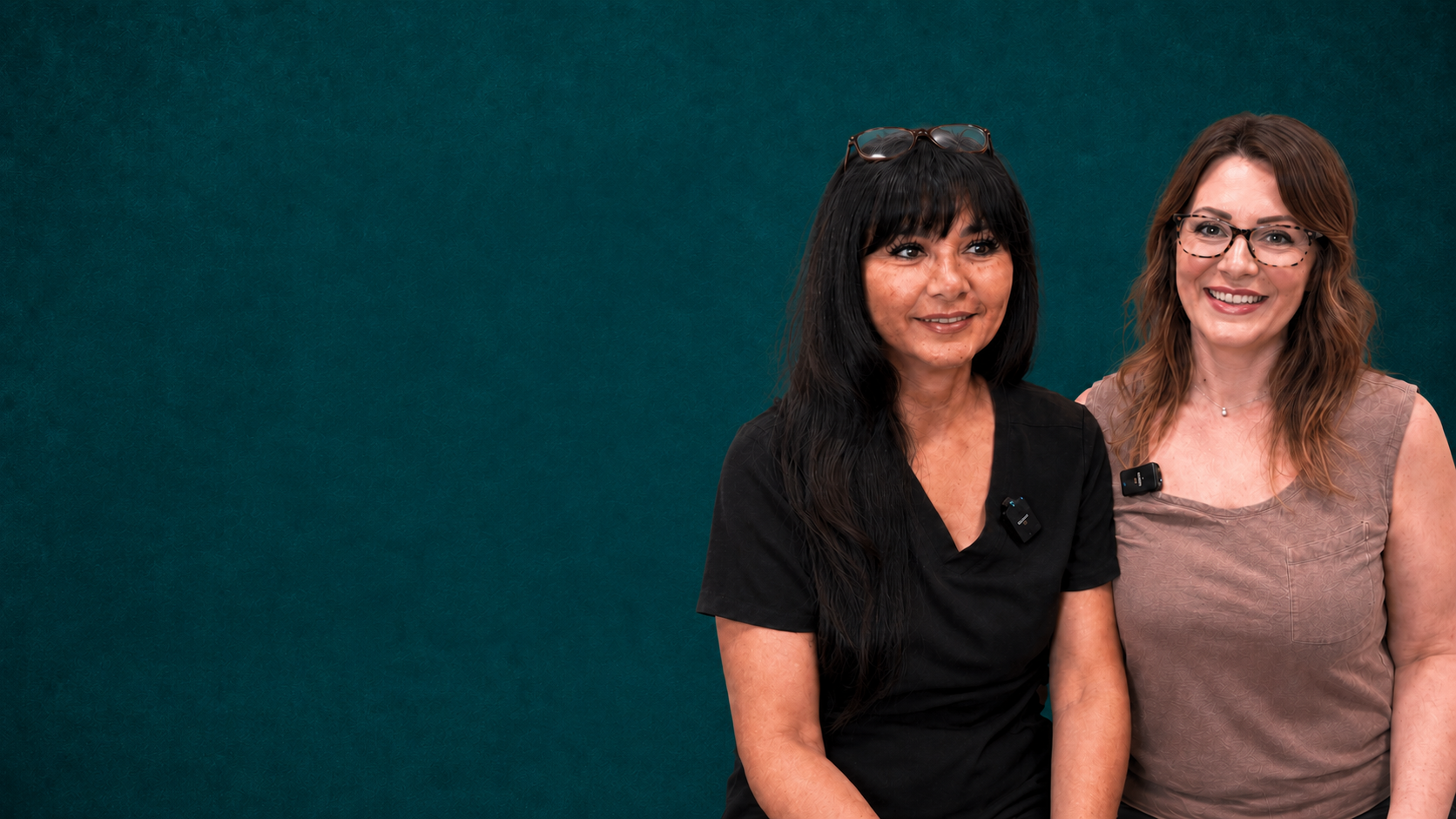
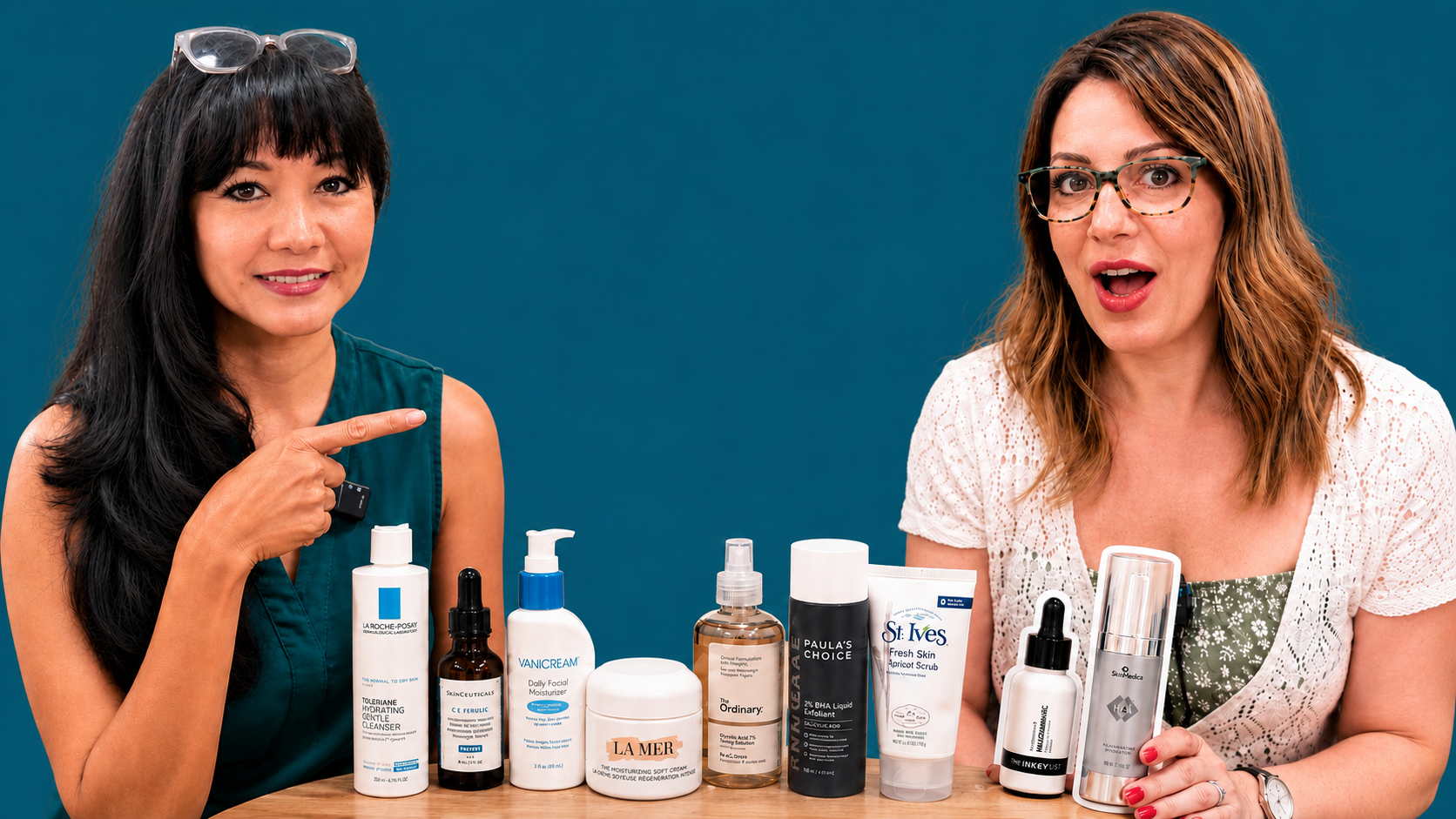
We had an idea for an episode: ask Gemini the most common questions we get from clients, live on air, and grade the answers in real time. No prep, no peeking ahead. Just two beauty professionals reacting honestly to what AI tells people about their hair and skin.
The overall score was about 90 to 95 percent. That last 5 to 10 percent is where things get interesting -- and where the difference between AI advice and professional advice starts to matter.
Here is everything we covered.
Can AI Give You a Personalized Hair Routine? A Pro Responds
Velia asked Gemini to recommend a Velia Beauty Co shampoo, conditioner, and styling routine for someone with long, straight, coarse hair that goes flat easily and is also color-treated. Here is what it recommended -- and how it did.
The Verdict: Strong, With One Miss
Gemini chose Body Positive Shampoo for thorough cleansing without stripping color-treated hair, and Body Positive Conditioner focused on mid-lengths to ends for shine and manageability without weighing down the roots. Both correct -- and the tip to keep conditioner off the roots was exactly right.
For styling, it recommended Act Natural Leave-In Treatment to protect color-treated hair from heat and lock in moisture before blow-drying. Also correct. Then Full Blown Volumizing Mousse for root lift, noting it should be worked into damp roots before blow-drying. Correct direction, though Gemini described it as a spray when it is not.
For finishing, Liquid Amethyst for one to two drops on dry ends to enhance shine on coarse hair. Great call -- it is weightless and finishing-friendly for coarse strands.
The one product Gemini missed: Dream Cream. Act Natural protects the mid-lengths and ends, but it does not add plumpness or body to them. A small amount of Dream Cream through the mid-lengths and ends would have rounded the routine out properly. Not a bad miss, but a meaningful one for someone with coarse, flat hair.
The last recommendation -- Cheat Day Dry Shampoo for roots on styling days or second-day hair -- is not wrong, but it is easily misread. Dry shampoo is never a day-one product. It exists to extend a style between wash days, not to be layered on freshly styled hair. If someone unfamiliar with dry shampoo read that recommendation without that context, they would use it wrong.
Overall score: about 95 percent. Better than expected, and a genuinely good starting point for anyone shopping the line.
AI Advice for Rosacea Bridal Skincare -- What It Got Right and Wrong
Monina asked Gemini what she would recommend for a bride with active rosacea -- both the skincare leading up to the wedding and the foundation for the day itself.
The Verdict: 95 Percent
The protocol Gemini outlined was solid. Six to nine months out: gentle non-foaming cleansers, hyaluronic acid or niacinamide serums, barrier repair moisturizers with ceramides, daily mineral sunscreen with zinc oxide or titanium dioxide. All correct. The reasoning on mineral versus chemical sunscreen was also right -- chemical filters can cause stinging and flushing on rosacea-prone skin. Physical blockers are always the better choice.
The guidance to avoid harsh exfoliants -- AHAs, BHAs, physical scrubs, drying alcohols -- was also correct. Rosacea is an inflammatory condition and anything that creates friction or chemical irritation will trigger it.
The one place it got a pass rather than full marks: it said to avoid new products and aggressive treatments in the month before the wedding. Technically correct as a blanket rule, but there is a newer exception it could not have known about.
The Bio Microneedling spicule facial
-- covered in a previous episode -- works through a completely different mechanism than traditional treatments and can actually be done two weeks before the wedding. Because it does not create a wound response or trigger excess melanin production, it does not carry the same risk. AI cannot know about brand new clinical techniques. That is one reason why a professional consultation still matters.
For foundation, Gemini recommended NARS Light Reflecting Foundation (fragrance-free, luminous, good for redness), Estee Lauder Double Wear (oil-free, transfer-resistant, fragrance-free), and IT Cosmetics CC+ Cream. The IT Cosmetics recommendation is particularly relevant -- the founder developed the line specifically because she had severe rosacea herself. Anything from the IT line is worth considering for rosacea-prone skin.
Wedding day application tips from Gemini: green-tinted primer to neutralize redness (green cancels red on the color wheel -- it looks alarming but disappears under foundation), cool damp beauty sponges to avoid transferring heat to the skin, and tapping or pressing rather than dragging products in. All of these are techniques Monina uses in her bridal work. The friction point is a real one -- rubbing causes flushing, especially on reactive skin.
What Gemini did not mention: keeping the room cool, using cold tools like the Osmosis cooler over the skin before makeup application, and the value of a trial run. If you have rosacea and you are not planning a hair and makeup trial, please reconsider. Showing up on your wedding day as the first time your artist has seen your skin is a risk that is very easy to avoid.
For anyone not local to Monina, she recommends reaching out to a holistic dermatologist or holistic esthetician who will look at the whole person -- triggers, internal factors, lifestyle -- rather than just prescribing a topical product. There is also an AI tool called Ask Dr. Ben Johnson (created by the founder of Osmosis) that allows you to upload photos and receive specific product and protocol guidance. That is a better AI option for rosacea than a general-purpose assistant.
The most important thing for any bride with rosacea: start working on barrier repair as early as possible. Rosacea is fundamentally a compromised barrier condition. The barrier cannot protect the skin from weather, food triggers, environmental factors, or anything else when it is weakened. Strengthening it is the foundation of everything else.
AI Said Go From Dark Brown to Light Brown at Home. Here Is What a Pro Says.
Velia asked Gemini this one -- and what came back was a full shopping list and step-by-step instructions.
The Verdict: Technically Accurate. Practically Terrifying.
Gemini correctly identified that standard box dye in a lighter shade will not work -- color does not lift color. To go lighter, you have to lift first. It recommended bleach powder with a bond-building additive, 20 volume developer (correct -- avoid 30 or 40 volume at home), a demi-permanent toner in your target level with an ash or neutral undertone to neutralize warmth, a 6 to 10 volume developer for the toner, a non-metallic mixing bowl, color brush, sectioning clips, gloves, and a deep conditioning treatment.
Everything on that list is accurate. The process it described is also technically accurate: apply lightener to lengths first and roots last because scalp heat processes faster, lift to a golden orange-caramel before toning, then apply toner to neutralize brassiness and deposit the final color.
Here is the problem. The shopping list alone is roughly $120 to $180 depending on your hair length. That does not include the time -- at least two to four hours for longer hair. And that assumes you execute everything perfectly. Which almost no one without training does on their first attempt.
Even cosmetology students -- learning this process on mannequin heads with an instructor in the room -- need about 200 hours of practice before they start to feel comfortable. Someone reading a Gemini response at home has never held a brush, does not know what 20 volume developer looks like on hair, and cannot tell the difference between a level six and a level seven by looking at it.
One specific thing Gemini got wrong: it recommended bleach for anyone with dark brown hair who wants to go lighter. For someone with naturally dark brown virgin hair, bleach is not always necessary to reach a light brown. A professional can often achieve that result without bleaching the entire head. Gemini cannot account for your individual starting point -- your hair history, whether it is previously colored, its porosity, its integrity. A colorist can.
If budget is the reason you are considering doing this yourself, the better option is a cosmetology school. Students do not get onto the floor until they have the hours and supervised practice. It will take longer than a salon appointment, but the work is supervised, the cost is lower, and you are not risking chemical burns or breakage on your own bathroom floor. Bring a lunch.
Foundation for Teen Acne at Prom -- AI Recommendations vs Esthetician Reality
Monina asked Gemini this one -- and the answer was mostly good, with one notable gap.
The Verdict: Good Foundation (No Pun Intended), but Missing the Best Option
Gemini led with a disclaimer that this is for informational purposes only and medical advice should come from a professional. Fair enough. Then it recommended Clinique Anti-Blemish Solution Liquid Makeup (contains salicylic acid, neutralizes redness, moderate to full coverage), L'Oreal Infallible Fresh Wear Foundation (sweat-resistant, non-comedogenic, natural finish), and bareMinerals Original Foundation SPF 15 (talc-free, five-ingredient mineral formula, breathable for acne-prone skin).
A note on the bareMinerals pick: if you have a medium to darker skin tone, always check for talc in foundation. Talc is what creates an ashy white cast on deeper skin tones. The talc-free note was a good catch.
Prom application tips from Gemini were solid: spot conceal rather than caking foundation all over, use a clean damp sponge or synthetic brush to avoid introducing bacteria to open breakouts. The bacteria point is important -- if you reuse sponges without cleaning them, you are putting the bacteria from your last use directly onto inflamed skin. If you use the wedge-style sponges that come in bulk packs, do not reuse them. If you use a quality blending sponge that can be washed, clean it every time.
What Gemini did not mention -- and could not, because it does not know about it -- is
Monina's custom blended foundation. This is not a regular foundation. It is built to order and can be formulated to be oil-free, non-comedogenic, loaded with botanical ingredients that calm inflammation, and adjusted with color correctors to neutralize redness. A small amount of green added to the blend neutralizes red without changing the overall shade. The botanicals in the formula actively help the skin while covering it, rather than just sitting on top. For someone with active acne, a foundation that is healing the skin while they wear it is a meaningfully different thing than one that is simply non-comedogenic.
The honest truth about makeup on active acne: acne is three-dimensional. Foundation, concealer, and color correction can neutralize redness and even out skin tone. Nothing will create a smooth surface over raised, inflamed skin. The most important thing is taking care of the skin itself -- figuring out triggers, using the right products, getting professional guidance if possible -- so that by prom night, the skin is in the best possible condition, not just covered.
Custom blended foundation consultations are available at
Moderne Beauty in Los Gatos, California, and Monina does Zoom consultations for anyone not local. If you are struggling with acne and regular foundations are not working for you, reach out.
The Overall Verdict: AI Is a Starting Point, Not the Full Story
Ninety to 95 percent is actually better than either of us expected going in. For general guidance -- product categories, ingredient logic, basic protocols -- AI does a decent job. It would be a reasonable starting point for someone with no professional in their life to ask.
The gap is in the personalization. AI does not know your hair history, your skin triggers, your lifestyle, your previous chemical treatments, whether your rosacea is hormonal or food-related, or whether your acne is inflammatory or cystic. A hairstylist and esthetician do -- or they can find out. That context is what changes a 90 percent answer into the right one.
Use AI to start the conversation. Then verify with someone who actually knows you.
Monina's resources:
Skincare Analysis
-- Find out your skin type and get personalized recommendations
Color App -- Find the shades and colors that work for your features
Book a free consultation at Moderne Beauty (Los Gatos, CA or via Zoom)